I keep sending money, but we have never agreed exactly what the next amount is meant to achieve.
← Back to courses and collections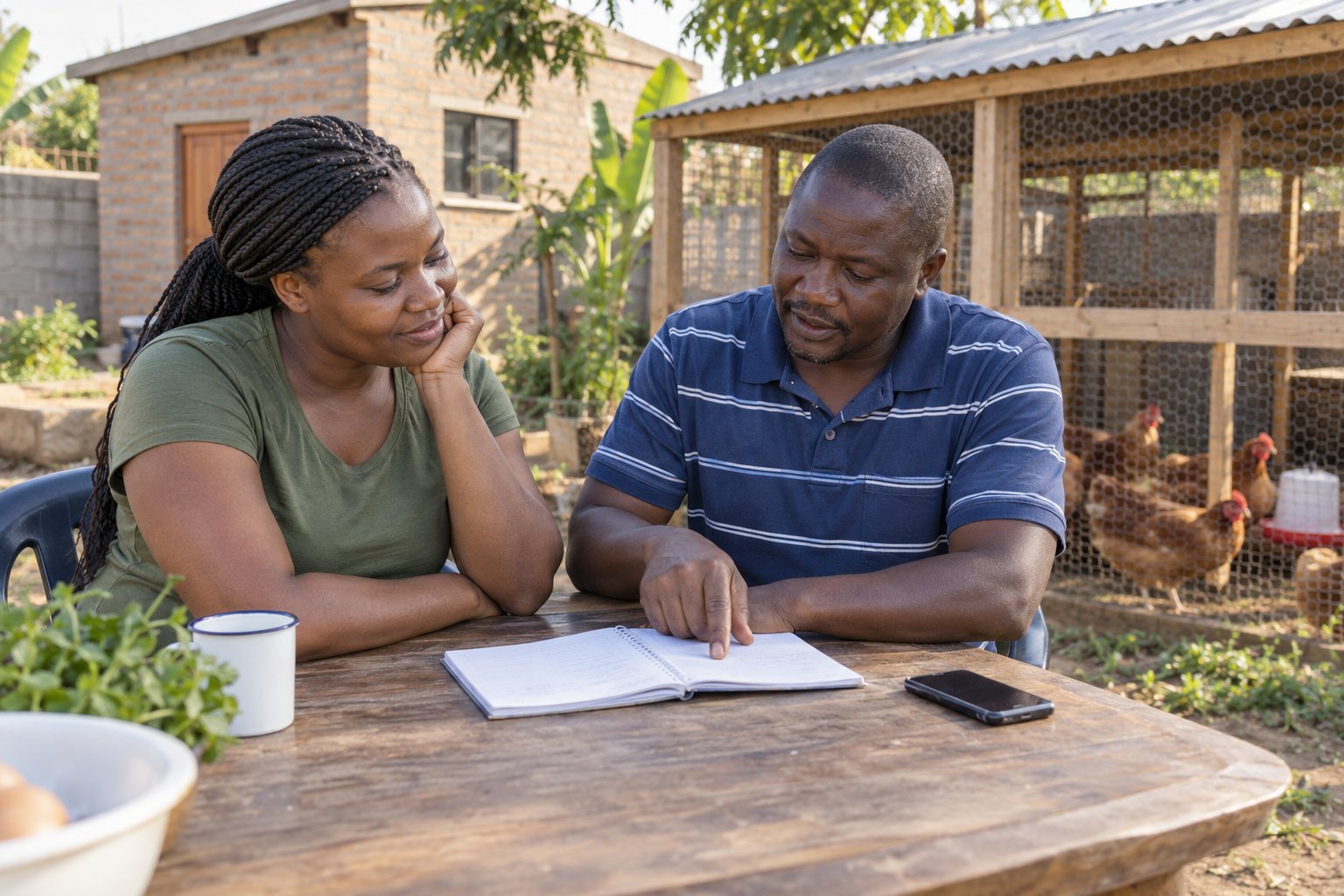 Care & connectionA shared vision needs a plan people can follow.
Care & connection · PRACTICAL LEARNING
From Idea to Progress: A Back-Home Project Plan
Three weeks to give a project back home a clearer goal, workable budget, agreed responsibilities and useful progress reports. From a poultry venture or shop to a house or a smaller shared idea. £19 for 2–15 adults.
Who is this for?
For adults planning or supporting a project together across homes or countries: the person funding it, the person coordinating locally, relatives and trusted collaborators. Useful before starting or when an existing project needs clearer structure. Two people can use it; up to 15 named adults may join.
£19.00 · fixed total for 2–15 adults · one-time payment
You are sending money for a project back home. Does everyone understand the plan?
From a poultry business to a building project, a shared vision needs clear tasks and useful updates. Agree scope, roles, costs and decisions before small misunderstandings become expensive.
Useful things you can try
- Clarify what is included and who is responsible.
- Plan milestones, costs and evidence for an update.
- Agree how a delay or change will be discussed.
Tools to take away: Our one-page project brief · Next-stage task and cost plan · Our short progress report.
Does this sound familiar?
Everyone says the project is moving, but nobody can show what is finished, what it cost or what comes next.
We have a good idea, but changes, missing quotes and unclear responsibilities keep getting in the way.
These are a few starting points. Your relationships, goals and resources may look different. Choose the conversations and shared actions that people would welcome.
See how this programme can work for you ↓3 weeks · 21-day shared access windowShort self-paced lessons and shared practical activitiesLearning languages: English
Care & connectionA shared vision needs a plan people can follow.What you can put into practice
- Agree a plain-language project goal, scope and what a completed stage would look like.
- Break the next stage into tasks with people responsible, tasks that must happen first and realistic dates.
- Keep separate records of estimated costs, costs you have agreed to pay, money already spent and cash still available.
- Use a short progress report with evidence suited to the task and a clear decision request.
- Agree how changes, delays, supplier issues and concerns will be handled.
- Set a review and handover routine that can continue after the course.
How the course helps
One cousin imagines a small poultry trial; another thinks the family is funding a permanent business. Someone abroad pictures a finished house; the person locally expects enough money for foundations. Start by asking each person what they think is being agreed. Differences found now are cheaper to discuss than differences discovered after money is spent. Examples include small businesses, poultry ideas, home improvements and building projects with changing prices, limited funds and local suppliers. They are examples of organising work, not technical plans. Use local qualified advice for construction, animal health, permits, contracts, ownership and regulated work.
Make it work in your setting
Examples include small businesses, poultry ideas, home improvements and building projects with changing prices, limited funds and local suppliers. They are examples of organising work, not technical plans. Use local qualified advice for construction, animal health, permits, contracts, ownership and regulated work. How to use our examples →
A situation you may recognise
- I keep sending money, but we have never agreed exactly what the next amount is meant to achieve.
- Everyone says the project is moving, but nobody can show what is finished, what it cost or what comes next.
- We have a good idea, but changes, missing quotes and unclear responsibilities keep getting in the way.
Why this can be useful to give
One buyer pays £19 for a final list of 2–15 named adults. Include yourself in the list if you want to learn. Agree participation before entering details; everyone gets their own instructions and shares the selected 21-day timetable. Three weeks to give a project back home a clearer goal, workable budget, agreed responsibilities and useful progress reports. From a poultry venture or shop to a house or a smaller shared idea. £19 for 2–15 adults.
What you’ll explore
01 · Week 1 · Agree what you are actually trying to build
“Start some chickens” and “build a house” are hopes. What exactly is the next workable stage? Agree a one-page brief for the next stage. List the unanswered questions that must be resolved before commitment.
02 · Week 1 · Break the next stage into tasks and a realistic budget
A useful plan shows what comes before what, and which costs are still guesses. Plan the next stage’s tasks and costs. Mark every unconfirmed price and dependency instead of making the total look more certain than it is.
03 · Week 2 · Make a progress report people can use
“Everything is going well” is reassuring. It does not tell us what decision is needed next. Agree one reporting template and try it using the actual project or a fictional stage. Ask whether the reader can identify the next decision.
04 · Week 2 · Agree spending, suppliers and changes before they happen
A clear process protects relationships as well as money. Agree a spending and change process. Practise one change request before a real disagreement makes the conversation harder.
05 · Week 3 · Handle delays and protect the next decision
The question is not whether a project will face uncertainty. It is how you respond when it does. Write three important risks and practise a response to one actual or fictional delay. Agree when the group would pause for advice.
06 · Week 3 · Review, hand over and keep the structure going
A completed task is not always a working result. Decide how you will check, maintain and report after these weeks. Create a short handover or next-stage checklist, name the follow-up owner and agree the next reporting and review dates.
Tools you can use afterwards
Our one-page project brief; Next-stage task and cost plan; Our short progress report; Spending and change agreement; Risks, issues and a revised next step; Stage review and ongoing project rhythm. Download the sheets to keep, copy the headings onto paper, or simply reflect. Shared conversations use your own chosen methods; no personal worksheet upload is required.
Practical project organisation, not a professional project-management qualification or construction, veterinary, legal, investment or tax advice. A plan does not guarantee profit, completion, safety or ownership. Check technical requirements and qualified local advice before committing money or work.